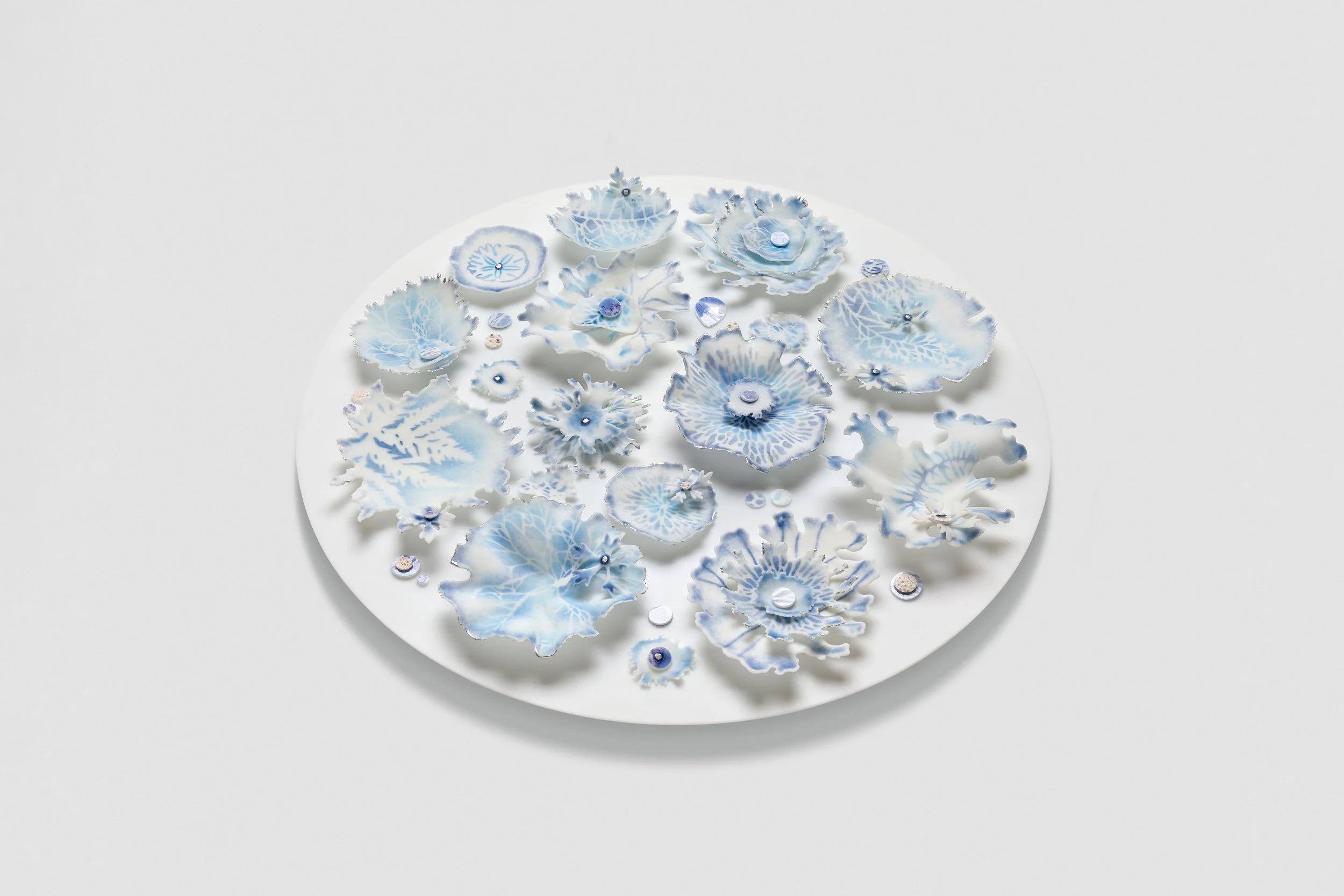
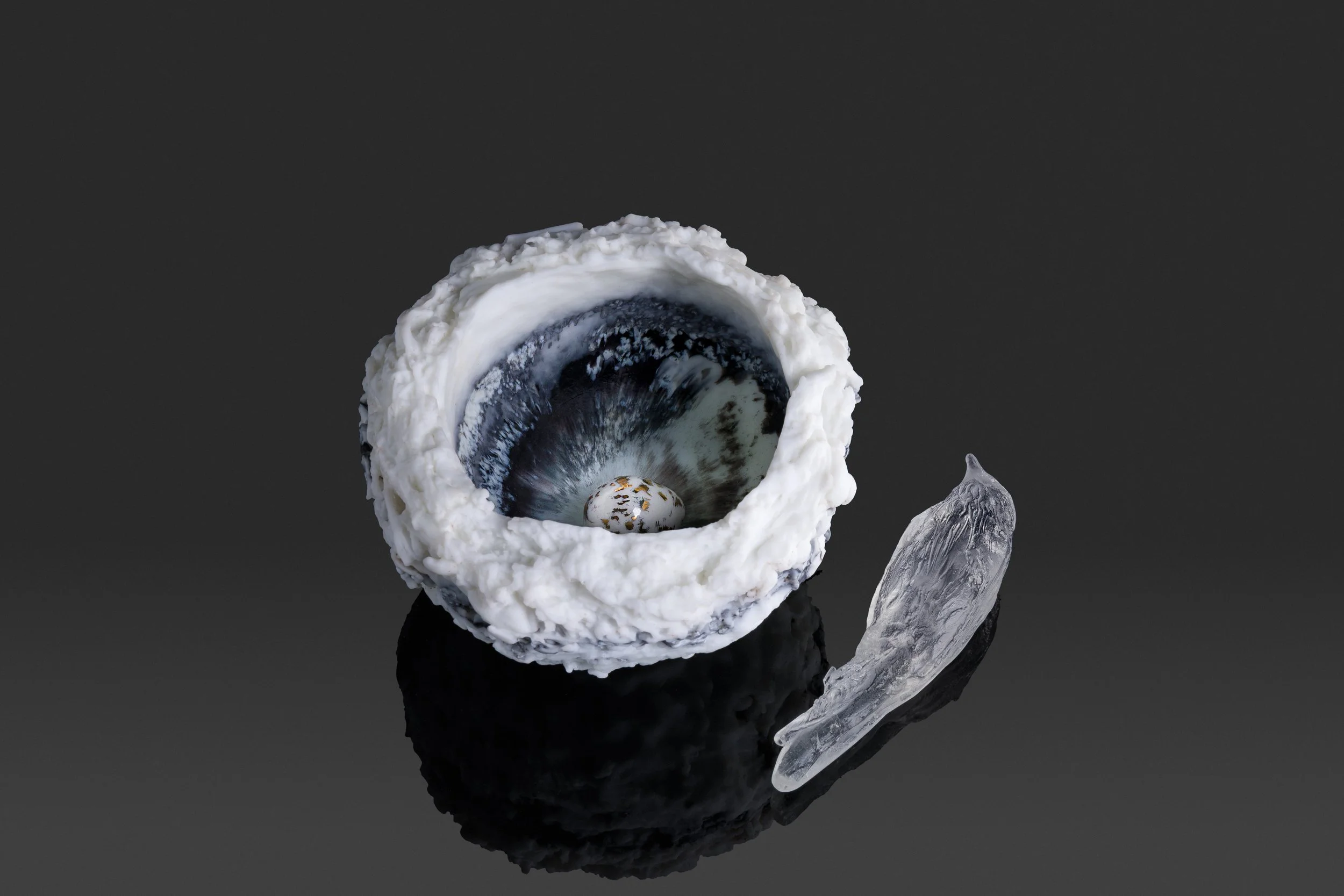
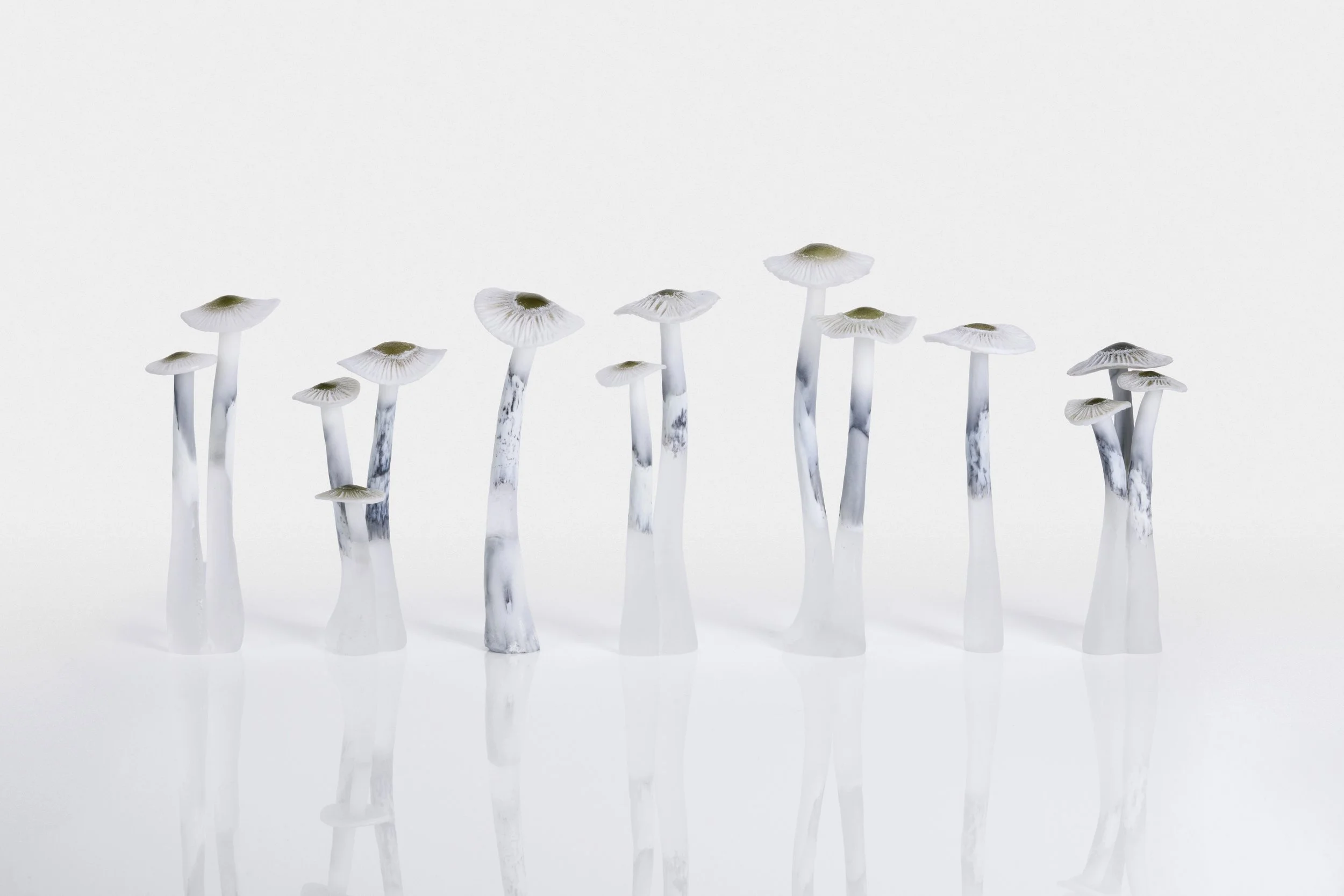
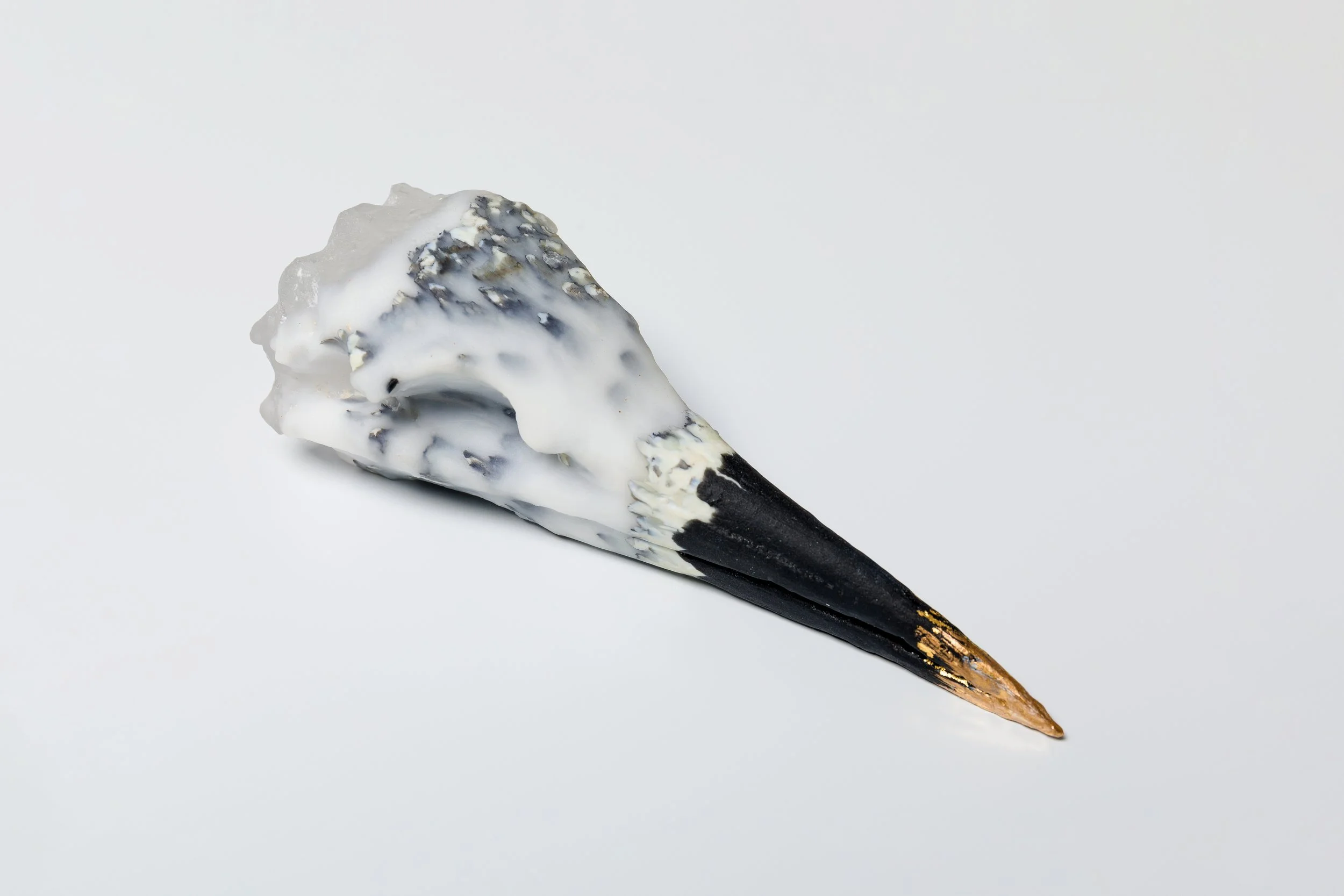
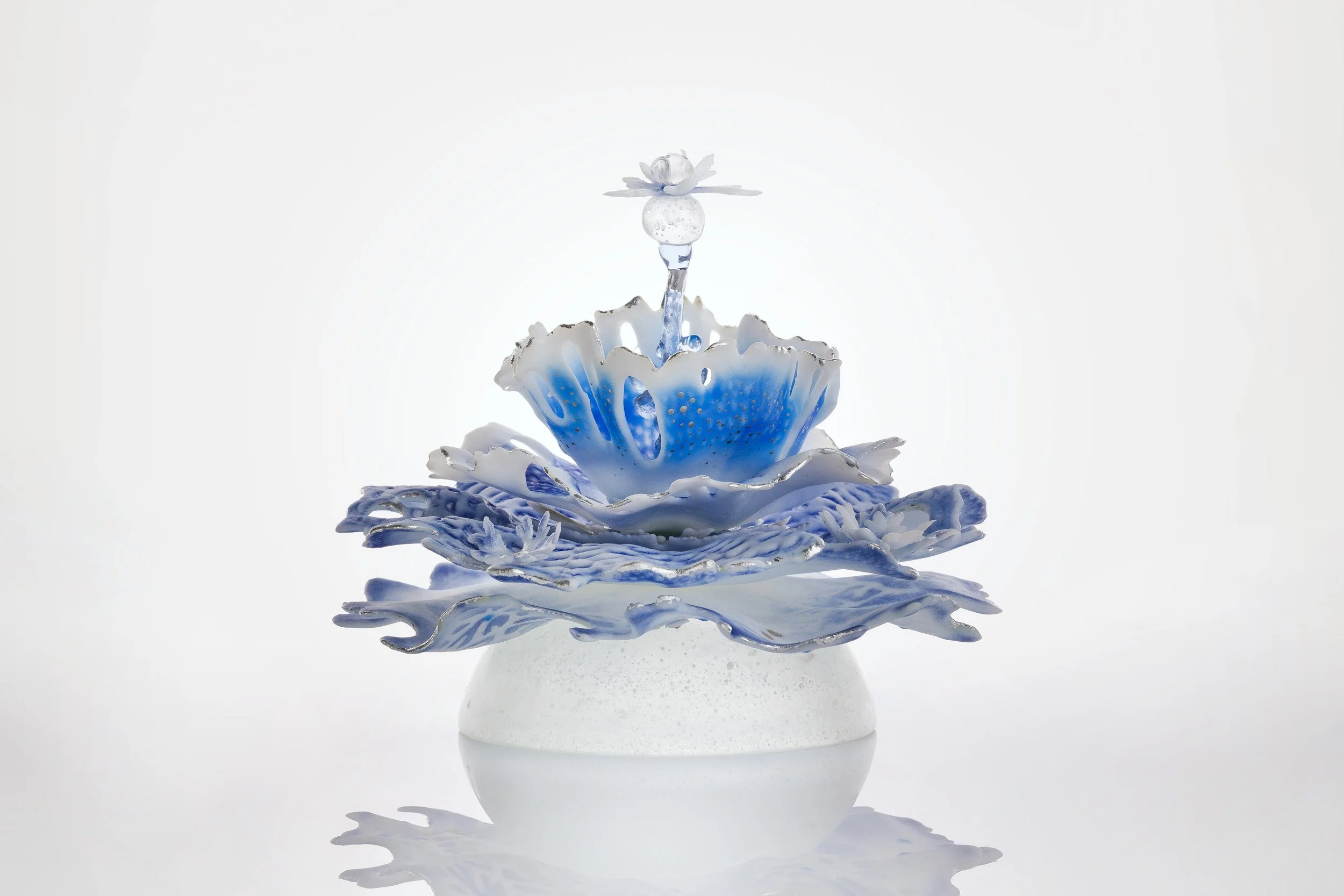
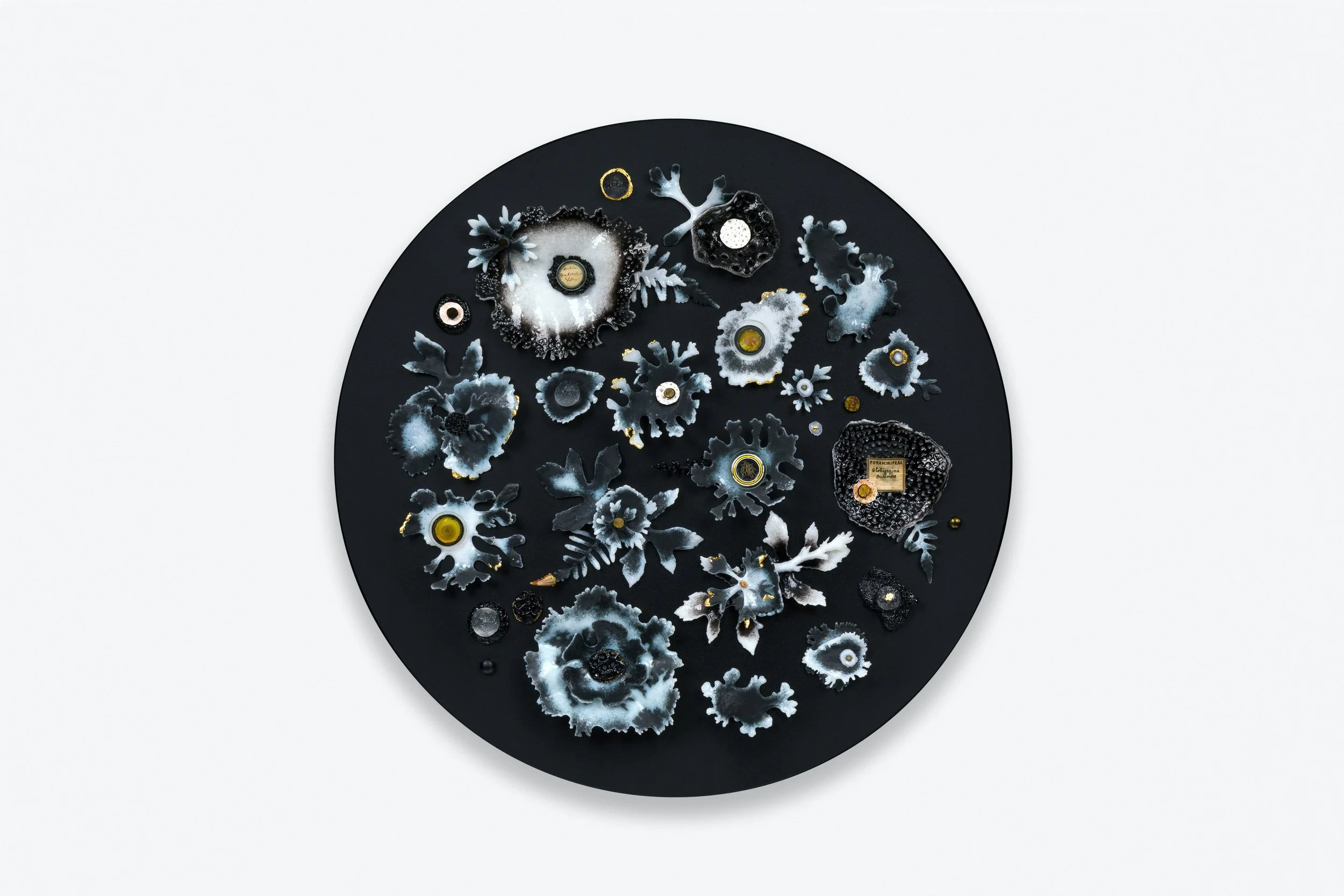
Verity Pulford is an artist who brings an experimental approach to her work, continuously developing and defining techniques to suit her needs. Although she is predominantly known for her practice in glass, her investigative approach also leads her to other materials in her work.

Nature, particularly the landscape of North Wales where she is based, inspires Verity Pulford’s practice. She aims to create work that captures literal elements of nature such as the quality of light in woodland and the intricacies of natural pattern and form, while also expressing the sense of calm, solace and peace that nature brings to her life.
— Julia Stephenson – Director National Glass Centre
Verity works at the edge of what glass can do — casting, pâte de verre, kiln-forming, etching, and now porcelain, all woven together with a restless, genuine curiosity. Nothing feels formulaic. The techniques serve the idea, not the other way around.

I recognise something deeply familiar in Verity’s work. We are both drawn to the forms that most people walk past: lichen, algae, moss, fungi. The quiet complexity at our feet. Where I find that language in metal, she finds it in glass, but the impulse is the same — to honour the intricate, the overlooked, the alive.

It’s rare to find a practice so technically adventurous and so emotionally grounded at the same time. Verity does both.
— Junko Mori – Metalworker
Verity is committed to continually developing her skill as a maker. She sees her practice as a journey.  The Arts Council of Wales awarded her a major production award in 2023, leading to this exhibition, while Wales Arts International funded her residency at Pilchuck in Seattle USA. She has been acknowledged twice by the National Eisteddfod of Wales, firstly in 2023, when selector Junko Mori applauded her work and last year in 2025, she was awarded the prestigious Gold Medal for Craft and Design. 

The Arts Council of Wales funded project Mutualism explored the connections between the land and the sea through an artistic investigation of the flora and fauna along our coast. Her process was both investigatory and celebratory, achieved through the magical material of glass.
— Philip Hughes OBE – Former Director Ruthin Craft Centre